hōʻike
Generate Realistic Transcriptome Data with Ease
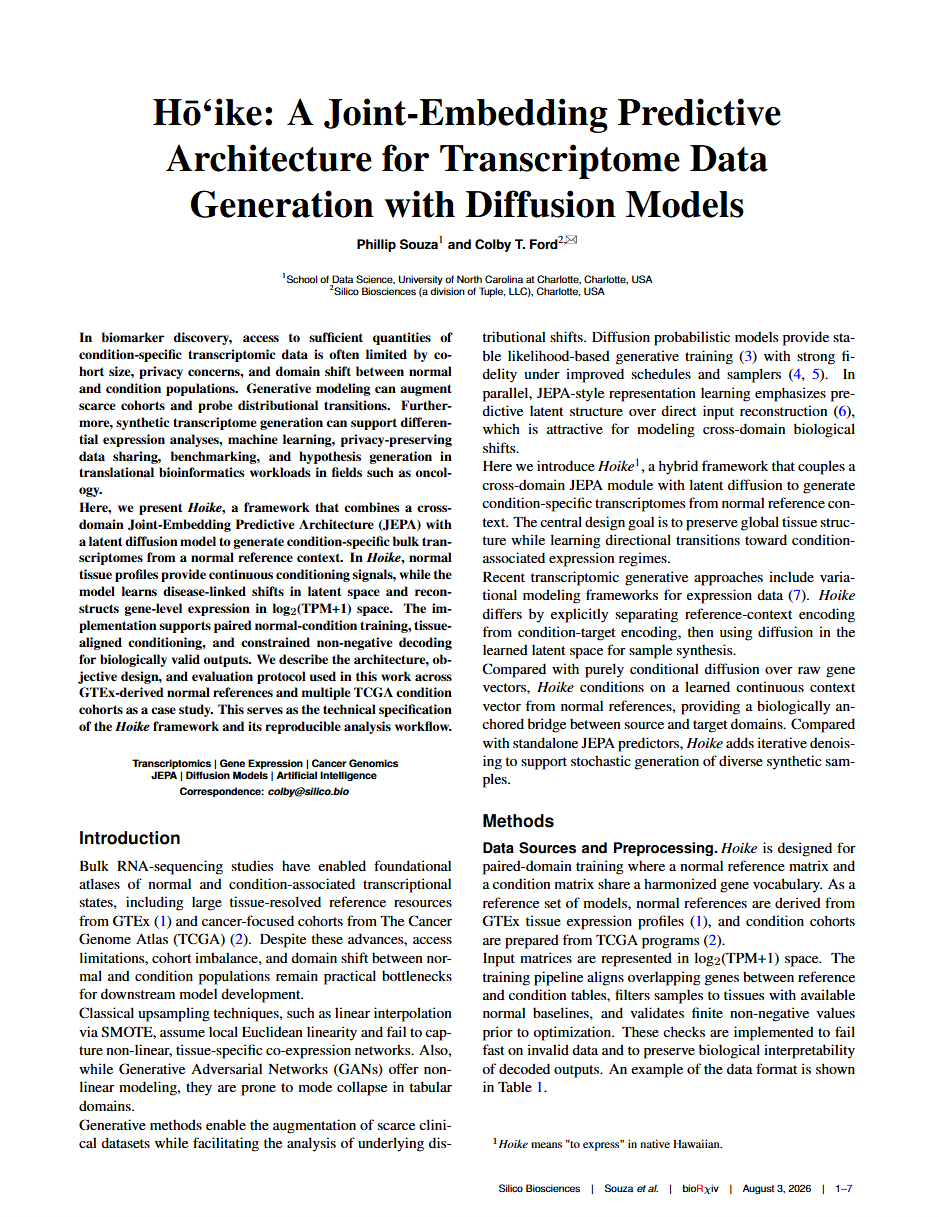
In clinical studies, the collection of transcriptome data is essential in the identification of biomarkers or to understand changes in gene expression given a disease/treatment.
However, a common issue is that we often have far fewer samples (rows) than genes (columns), leading to issues in downstream statistics or machine learning analyses.
We built Hoike to help you generate gene expression data with only a few condition samples.
(Oh, and the model generation logic is fully open-source and flexibly licensed.)
How We Built Hōʻike.
Model Training
We adopted a JEPA+diffusion based approach that takes in the normal expression data and then augments the data generation based on the smaller set of condition samples. Hoike serves as a model training framework rather than a one-size-fits-all model.
Output Evaluation
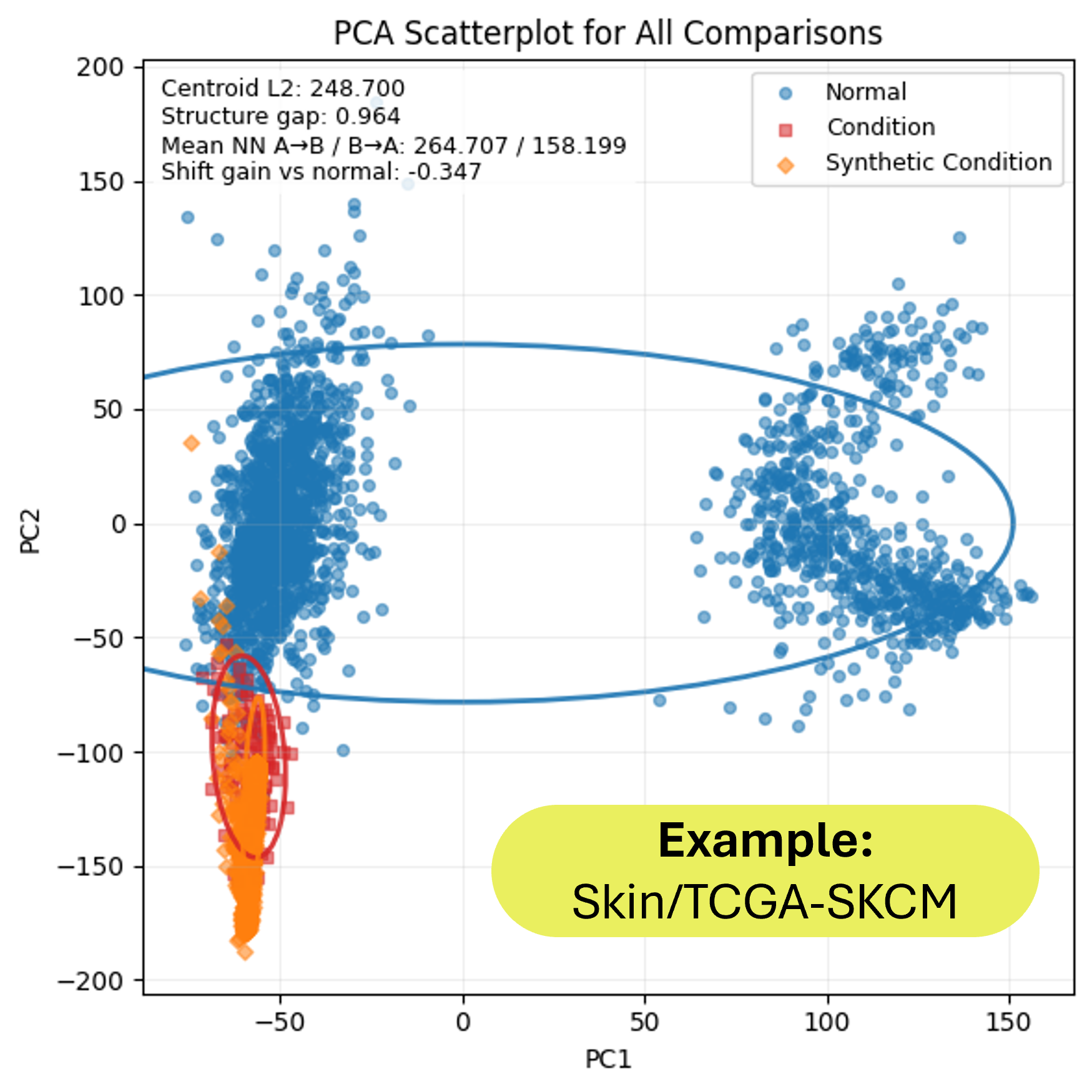
Since we’re trying to assess what “good” looks like across 10k+ genes, we had to get creative with the metrics. For the generated gene expression records, we look at covariance and geometry distances, PCA centroid distances, correlations, and mean similarity.
How It Works.
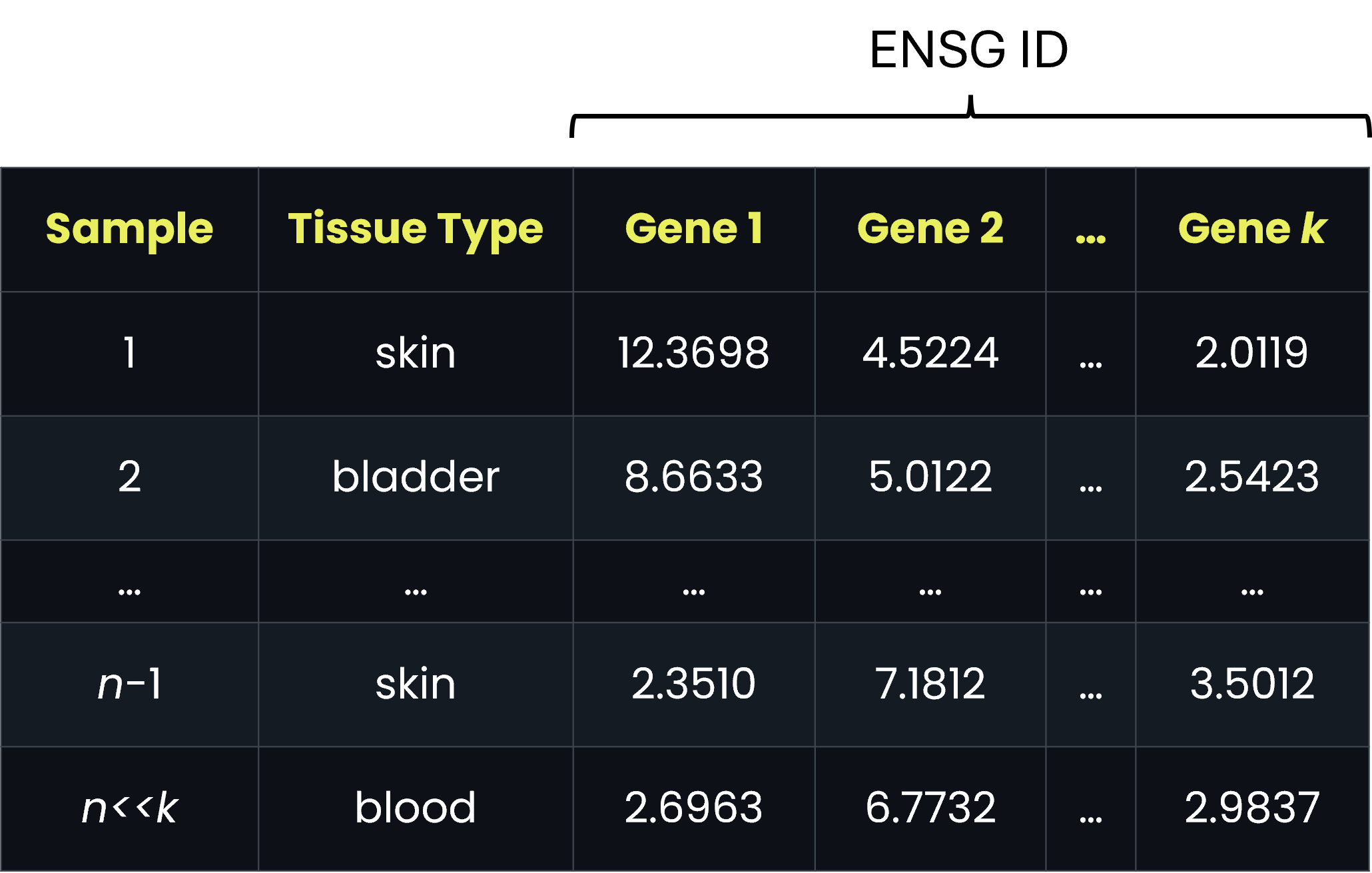
Simply collect a reference set of transcriptome data (such as from GTEx) and your condition set (the set you want to mimic) and shape them both in samples × genes format with a tissue type flag column.
Note that the architecture is built for Log2(TPM+1) transformed values.
Next, set your loss parameter weights for the JEPA and diffusion portions of the modeling process. These weights provide control over the latent representation, shape, mean, and reconstruction of the data generation.
Lastly, generate your new synthetic data and evaluate its similarity to your condition and normal data using a variety of built-in performance metrics.
A JEPA + Diffusion Approach
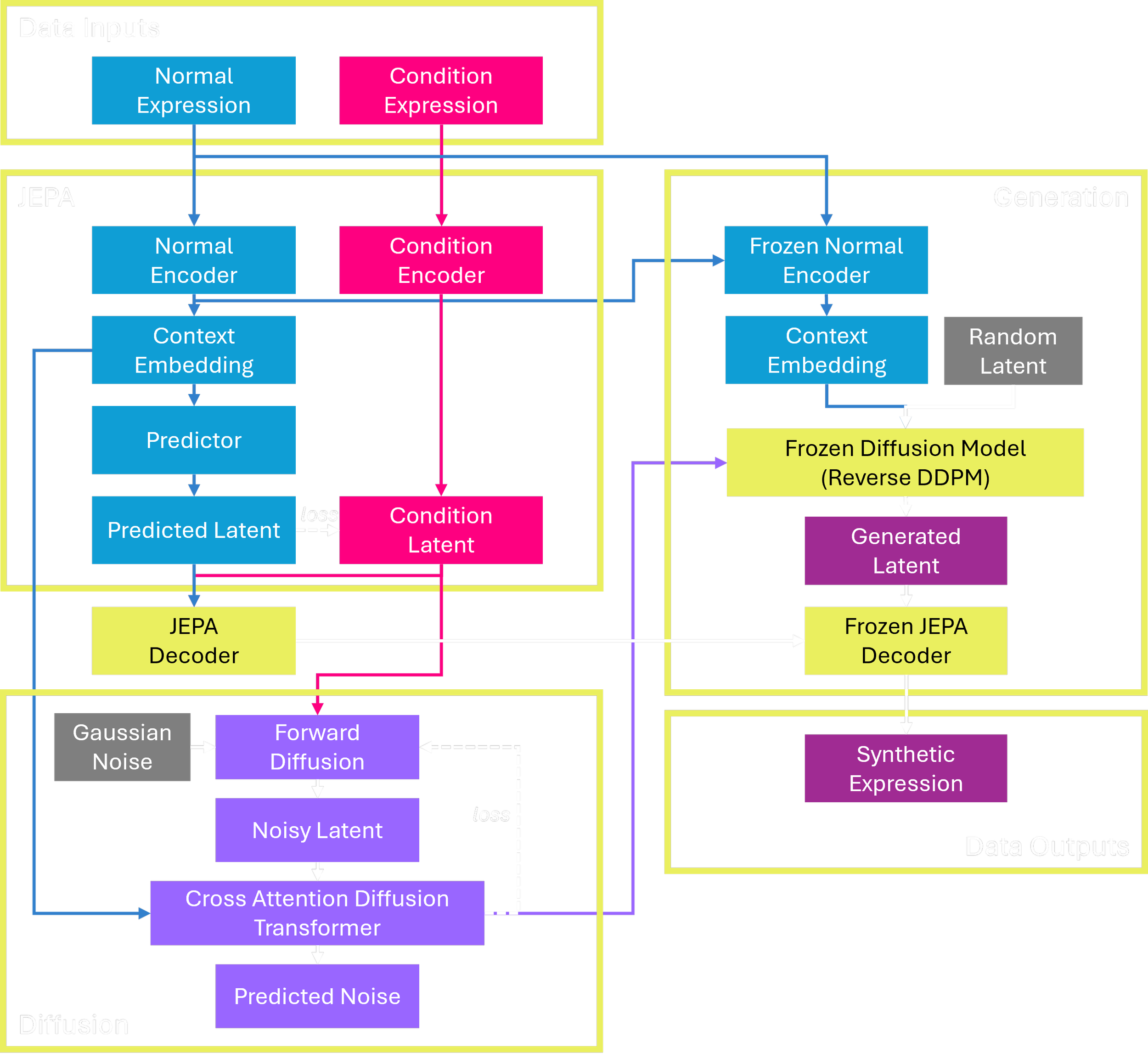
JEPA is a self-supervised learning framework that learns the relationship between the embeddings (latent space hidden representations) rather than explicit labels or examples.
JEPA encourages the model to focus on abstract, semantic features rather than low level details.
Acknowledgments
We’d like to thank our funders and acknowledge the collaborative group of individuals from UNC Charlotte and Tuple who made this project possible:
Phillip Souza and Colby T. Ford.

Funding for Azure cloud GPUs was provided by the Microsoft Most Valuable Professionals program.