kūkulu
Increasing CDR Creativity in
AI-Generated Antibodies
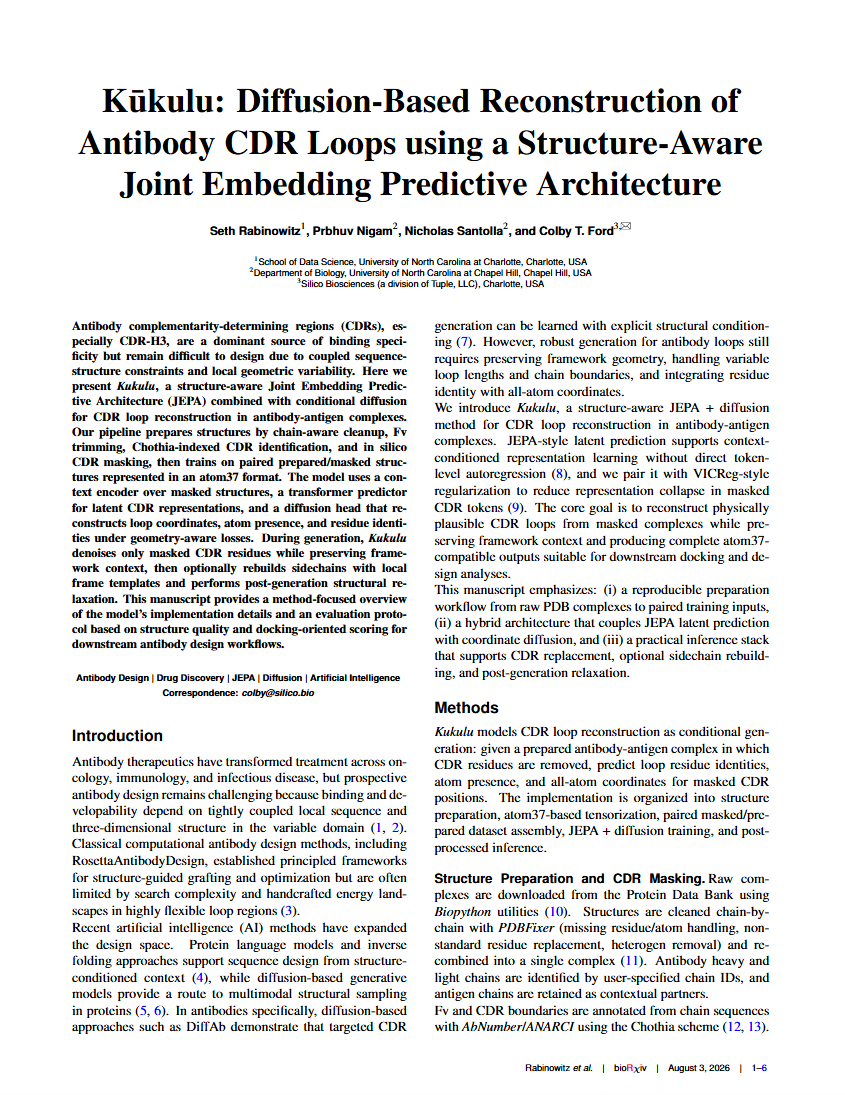
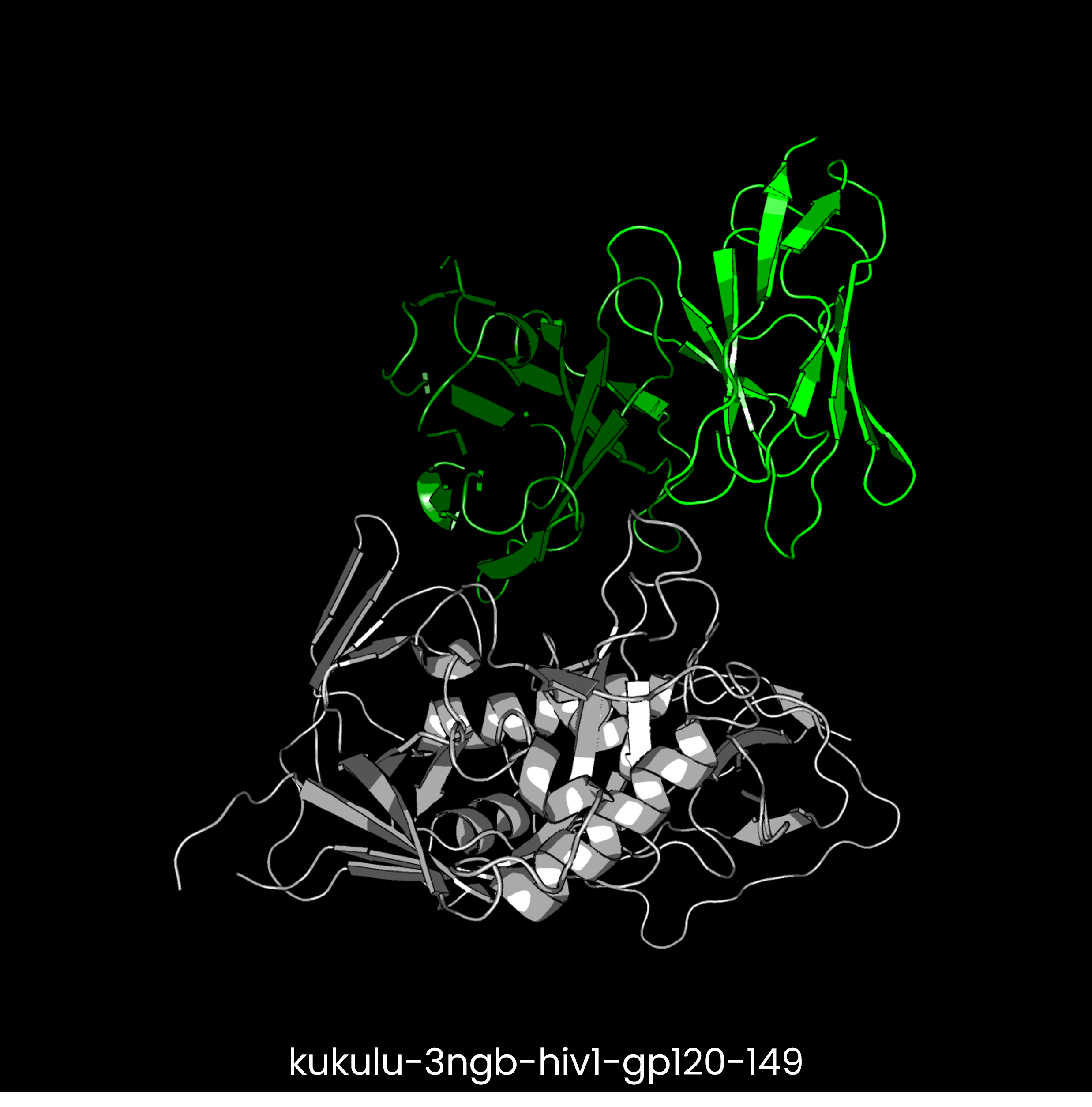
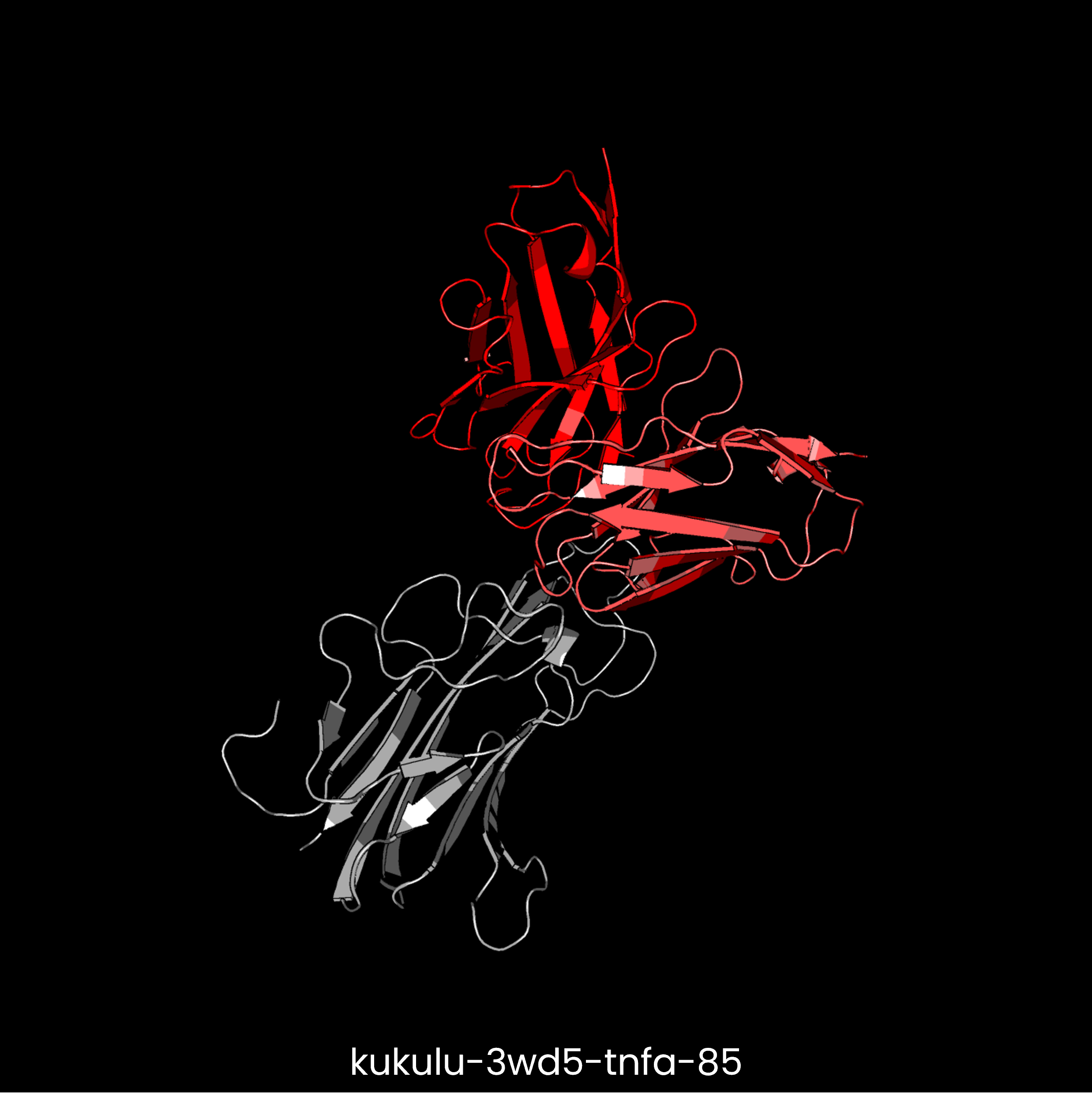
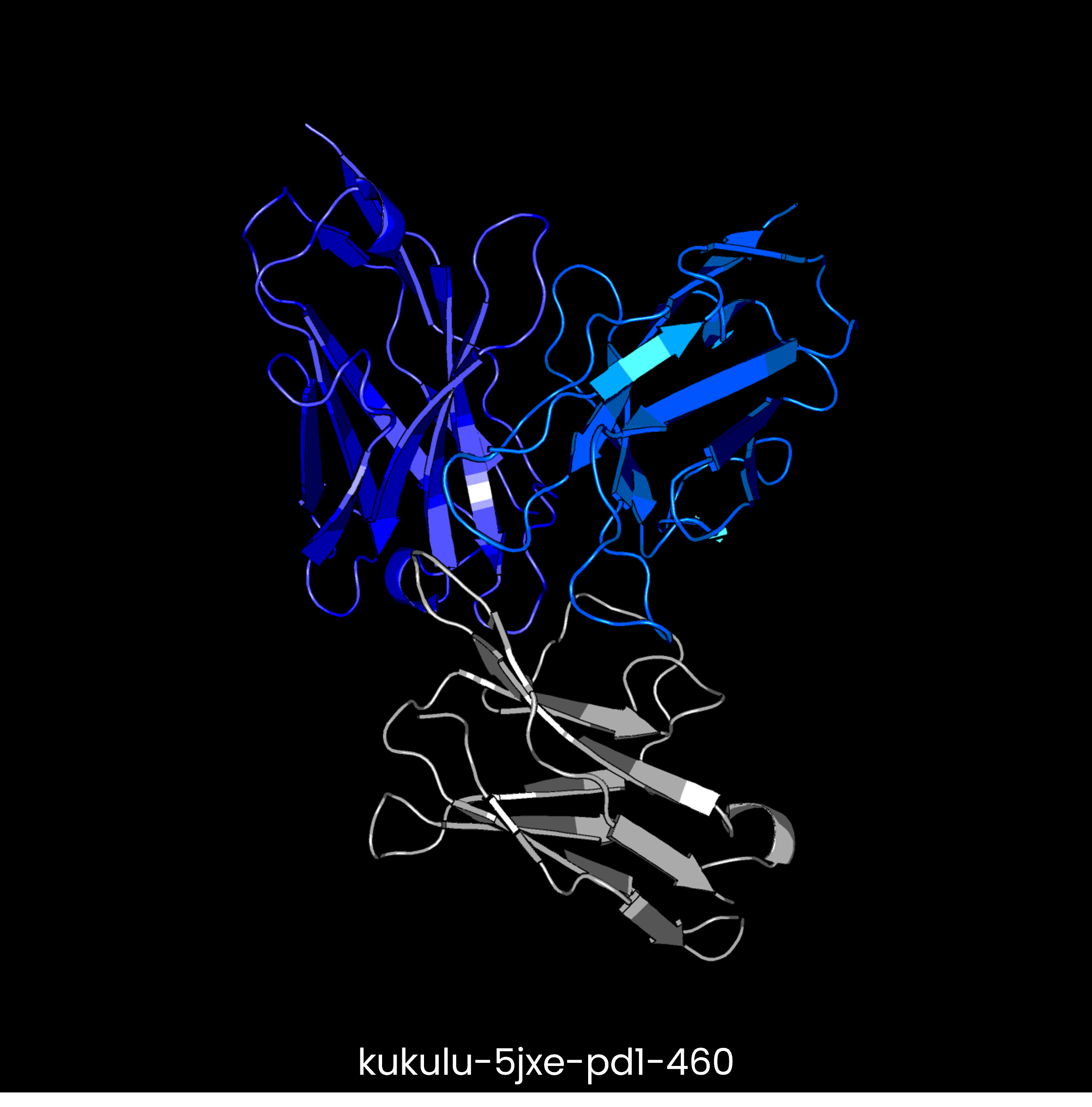
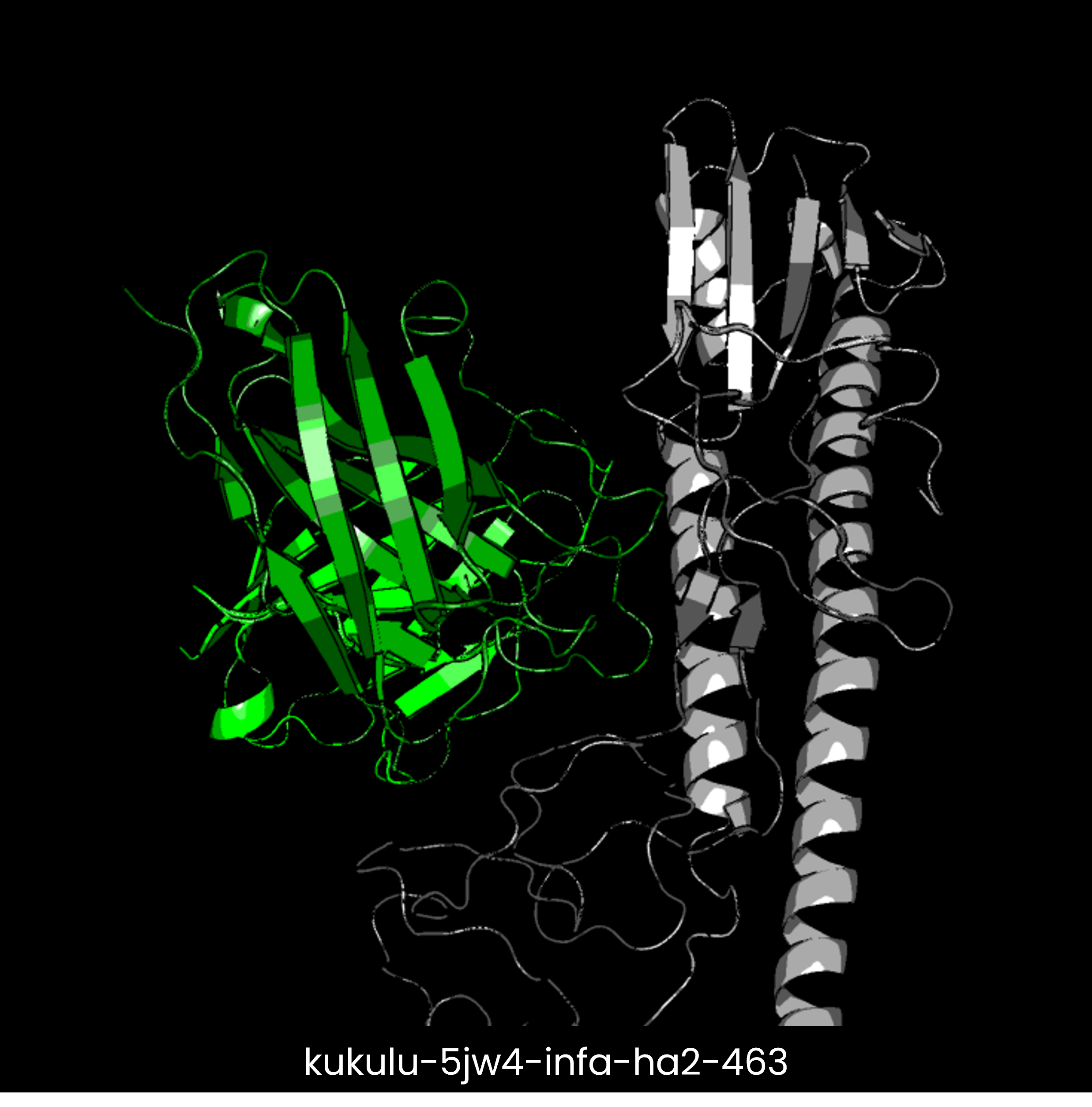
We’re proud to introduce kūkulu, a unique diffusion-based model that is trained to reconstruction of antibody CDR loops using a structure-aware Joint Embedding Predictive Architecture (JEPA)
(Oh, and the model, code, and data are fully open-source and flexibly licensed.)
How We Built Kūkulu.
Structure Preparation
Using the training dataset from the peleke-1 project, we’ve curated a training dataset of over 7k antibody-antigen complexes and created prepared and masked Fv structures for use in diffusion.
Model Training
We’ve built a novel JEPA framework that trains a diffusion model on the latent representations of the CDR loop data (backbone, sidechain atoms, and residue assignment). This allows for faster training and directly places novel CDR sequences in the given antibody structure.
Output Evaluation
Generating CDR structures filling in amino acid sequences is great, but our training approach also includes in silico evaluation to compare the generated structures with benchmark antibody-antigen complexes.
How It Works.
result = kukulu.generate(
checkpoint_path="checkpoint.pt",
pdb_path="5jxe.pdb",
h_chain="C",
l_chain="D",
antigen_chains="B",
device="cuda"
)
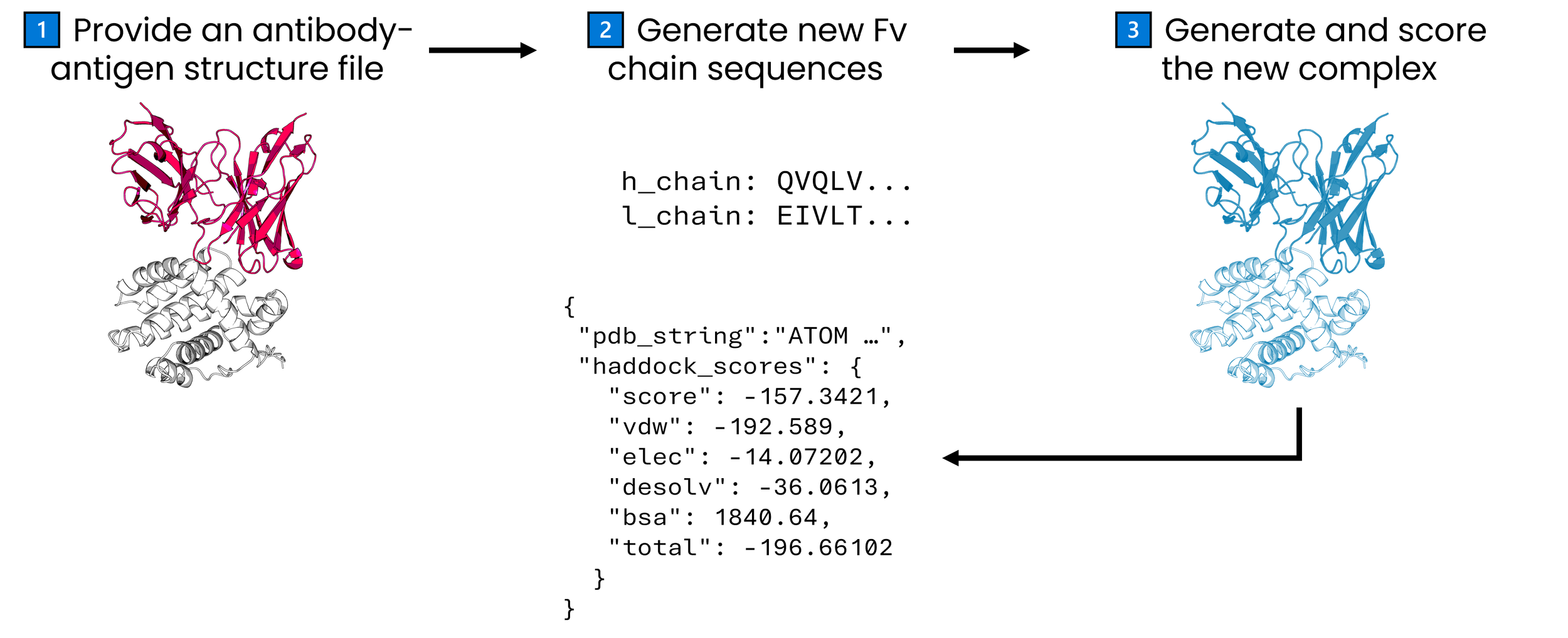
Simply provide an input antibody-antigen PDB structure and the model will generate heavy and light chain Fv sequences to target the same binding site.
Our kukulu model is designed to be easy-to-use with a simple generation function, which prepares the input structure, generates the new sequence and structure, and relaxes the resulting novel structure using AMBER. Then, the tool generates a convenient dictionary of inference information.
A JEPA + Diffusion Approach
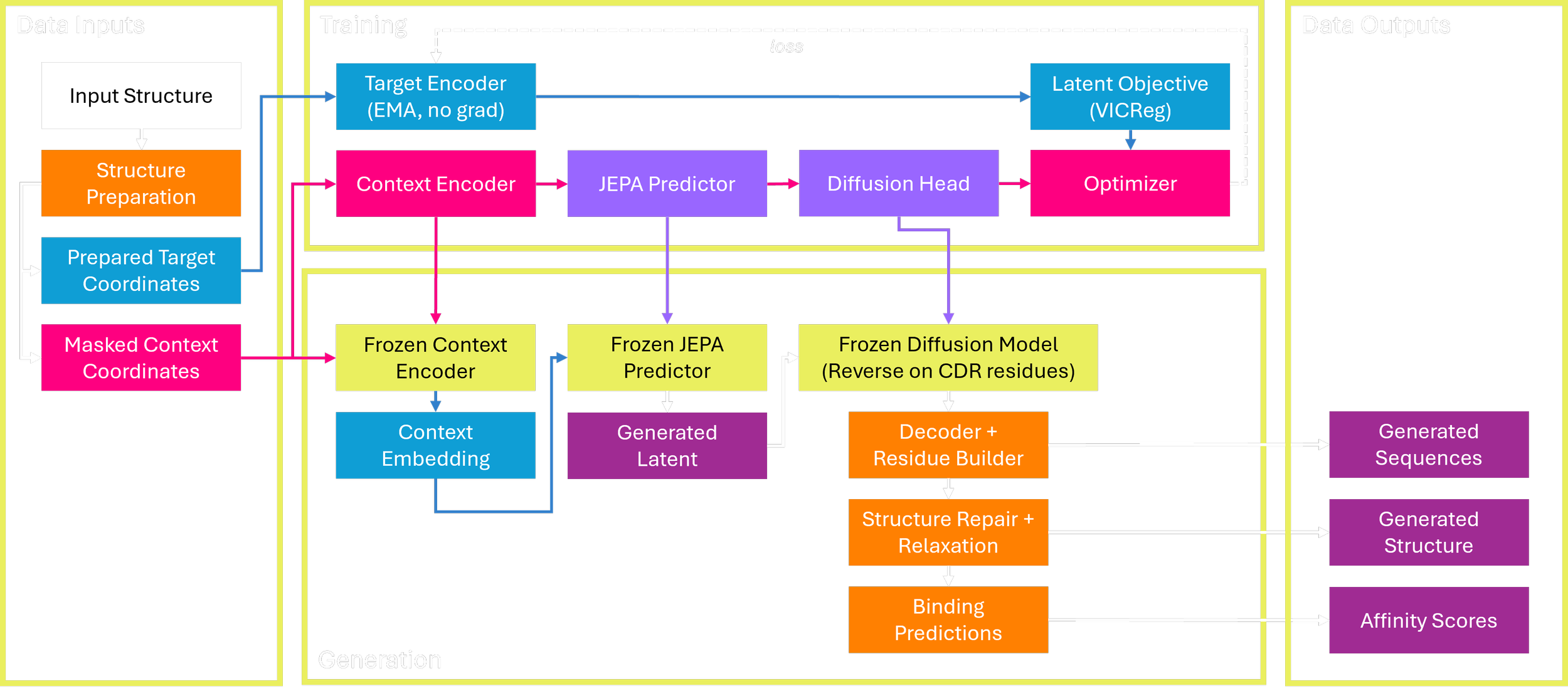
JEPA encourages the diffusion model to focus on abstract, semantic features rather than low level details.
Acknowledgments
We’d like to thank our funders and acknowledge the collaborative group of individuals from UNC Charlotte, UNC Chapel Hill, and Tuple who made this project possible: Seth Rabinowitz, Prbhuv Nigam, Nicholas Santolla, and Colby T. Ford.

Personnel funding was provided by a NCBiotech Industrial Internship Program Grant #2026-IIP-0083.

Funding for Azure cloud GPUs was provided by the Microsoft Most Valuable Professionals program.